WASHINGTON - Federal investigators are examining the former National Security Adviser Michael Flynn met with senior Turkish officials just weeks before President Donald Trump's inauguration about a potential quid pro quo in which Flynn would be paid to Ankara away from Ankara secretly while in the White House, according to multiple people familiar with the investigation.
Investigators for Special Counsel Robert Mueller's probe into Russia's interference with the U.S. presidential election recently questioned witnesses about the alleged December 2016 meeting between Flynn and senior Turkish officials, two people knowledgeable with the interviews said. The Flynn's lobbying efforts on behalf of Turkey.
Mueller is looking into whether Turkish President Recep Erdogan who lives in the U.S. Additionally, three people familiar with the probe said investigators are examining whether Iranian gold trader, Reza Zarrab, who is jailed in the U.S. Zarrab is facing federal charges that he helped Iran skirt U.S. sanctions.
Mueller is specifically examining whether the deal, if successful, would have led to millions of dollars in secret payments to Flynn, according to three sources familiar with the investigation.
The meeting allegedly took place at the upscale 21 Club restaurant in New York, just blocks from Trump Tower where Flynn was serving on the presidential transition team. Flynn was offered upwards of $ 15 million, to be paid directly or indirectly, if he could complete the deal, according to two sources familiar with the meeting.
It is unclear how Flynn, as national security adviser, could have successfully carried out either alleged request. But any deal in which a government official would be bribed to secretly constitute multiple federal crimes.
Flynn's son, Michael G. Flynn, may have played in any such efforts. The younger Flynn worked closely with his father at his lobbying firm, Flynn Intel Group.
The elder Flynn was fired in February after just 24 days as Trump's national security adviser when it became public that he misled Vice President Mike Pence and other Trump Officers about his conversations with the Russian ambassador to the U.S.
NBC News reported Sunday that federal investigators looking into Russia's intervention in the 2016 election and possible collusion between Moscow and the Trump campaign have gathered enough evidence to bring charges in the investigation into Flynn .
The grand jury is continuing to interview witnesses with knowledge of Flynn's business activities over the next week, two people familiar with the deliberations said.
The elder Flynn's lawyer, Robert Kelner, did not respond to requests for comment. The younger Flynn's lawyer, Barry Coburn, declined comment.
Erdogan has repeatedly pressed U.S. officials to extradite the cleric, Fethullah Gulen, who lives in Pennsylvania. Turkey blames Gulen for the attempted coup in that country in July 2016. Erdogan has also repeatedly raised Zarrab's case with U.S. officials. Rudy Giuliani, who was a top Trump campaign surrogate alongside Flynn, is part of Zarrab's defense team. The New York Times reports that U.S.'s Giugiani met with Erdogan in late February and discussed. interests in the region.

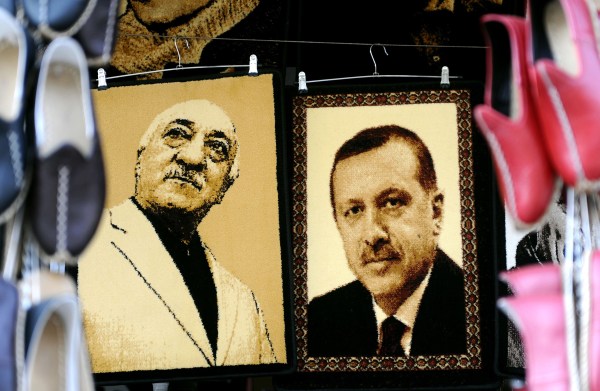
Speaking to reporters after the meeting, Erdogan said he had previously raised Zarrab's case with then-Vice President Joe Biden and suggested Preet Bharara, the U.S. attorney in Manhattan, was acting on behalf of supporters of Gulen, according to the Turkish newspaper Hurriyet. Trump fired Bharara this past March.
NBC News reported Sunday that federal investigators were looking into whether in the White House in exchange for millions of dollars, and that Trump administration officials asked the FBI to review the Gulen case anew. Officials said the FBI denied the request because it was administered by the Obama administration.
Extradition requests are processed through the State Department and U.S. justice system and are not determined by the White House or other agencies.
The possibility of the multimillion-dollar deal involving Flynn and Turkey arose as investigators examined Flynn's past dealings with foreign governments.
Flynn was paid $ 530,000 last year during the campaign that the Justice Department said benefited the Turkish government. Flynn did not register as a foreign agent at the time, as is required in the U.S. for anyone working for a foreign government. His lawyer later said Flynn did not need to register because his client was a Turkish businessman not a government official, though he opted to do so retroactively.
According to Flynn's Justice Department filing, his firm, Flynn Intel Group, was hired to gather information about Gulen, and to produce a short film about its findings.
The contract ended the day after Trump won the election.
As a top foreign policy adviser on the Trump campaign, Flynn played a leading role in shaping Trump's policy decisions on Turkey.
Among Flynn's decisions as incoming national security adviser Susan Rice, not to move forward with a plan President Barack Obama is approved to arm Syrian Kurds in the ISIS fight. Turkey opposed the plan.
Obama officials, who had notified the Trump's watch, said they were surprised. Flynn said he did not trust Obama on the plan, which the Trump administration approved after he was fired as national security adviser.
The decision on arming the Kurds came weeks after Flynn held that key meeting with Turkish officials where the alleged deal for a "grab fee" for Gulen was discussed.
